
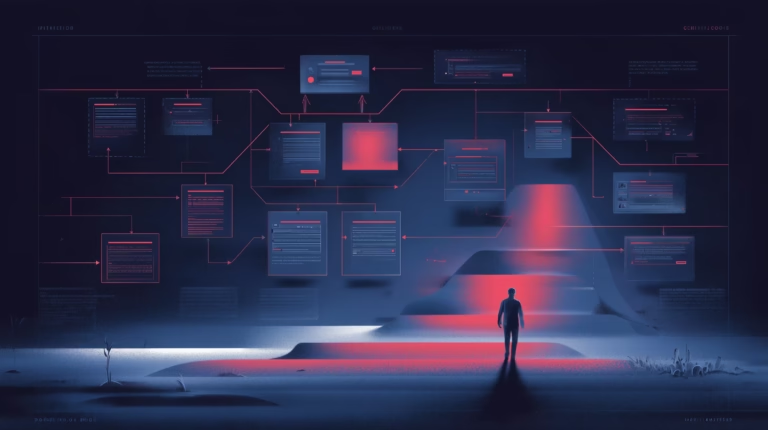
Website structure is one of those things visitors usually do not notice when everything works well. They simply find the information, move to the service, check the price or send an enquiry. But when the structure is weak, people get lost quickly. Then even a good-looking design does not help much.
Start with the goal, not the menu items
A common mistake is to start with the menu. Home, services, prices, about us, contacts. It seems neat, but it is not yet clear what a person has to do and what information is most important to him. First you need to understand the purpose.
This article is very helpful in how to clarify the website’s objectives. When the goal is clear, menus and pages come together much more calmly.
For example, if the goal is to get inquiries about a service, the website should have a clear explanation of the service, elements of trust, pricing logic, and a path to contact. If the goal is to sell products, the structure is already different. It is important to emphasize that there is no single universal template.
The user journey should be short and clear
A user journey shows how a person moves from first visit to action. It is important that the person does not have to guess where to press next. It can come through Google, through social networks, through a recommendation, or directly to a service page. In each case, it must be clear to him where he is and what to do next.
If the main pages are already planned on the website, it is worth checking whether they are really needed. This is written in more detail in the article What pages are essential for every website?.
The website menu must not be overloaded
A website menu should help, not show everything you have. If the menu has too many items, the visitor starts reading instead of moving. A few clear choices are often sufficient, and more in-depth information can be placed on internal pages.
Pricing information, service groups and articles should all have their place. If considering a pricing page, it's also a good idea to read the article Is it worth having a separate prices page?.
Structure also helps with SEO
It's easier for Google to understand your website when topics are organized logically. Service pages, related articles, categories and internal links work together. If everything is put together randomly, some of the content remains weak, even if the text itself is good.
Therefore, it is worth planning the structure together with the content. Here is a very related article about content strategy for the new site. Without content, the structure of the plan often becomes just a menu diagram and not a real visitor path.
Simple structure framework
- the title page explains the point and directs further
- service pages respond to specific needs
- pricing or process page reduces uncertainty
- articles help answer questions and boost SEO
- internal links connect related topics
If the structure is already planned and the website is already working, it is worth checking whether it is working. This article helps how to check whether a website is actually working.
It is worth drawing the structure according to human questions
In practice, it is convenient to start not with menu items, but with questions. What a person wants to understand first. What is he comparing? What are you afraid of? What information does he need before contacting you? Pages and their sequence emerge very quickly from these questions.
For example, if a visitor chooses a website development service, it is usually important for him to see examples of work, understand the logic of prices, the process and deadlines. If everything is hidden under the general "Services" page, he has to dig up the answers himself. Some people won't.
- list the most frequently asked questions from customers
- assign a page or block to each important question
- leave only the most important choices in the menu
- put less important explanations in articles or internal pages
Minimal sitemap for small business
A small service business usually does not need a very complex structure. But it needs to be clear. The front page provides direction, service pages explain solutions, pricing pages help you budget, projects or testimonials build trust, and a blog answers questions for those who aren't ready to buy.
If everything is crammed into one long page, a person has to choose for himself what is important to him. This can work for a very simple offering, but becomes more difficult as services grow. Then the structure should not look nice in the menu bar, but help the person move calmly through the solution.
- title page with clear direction
- separate pages for the most important services
- pricing or pricing explanation page
- projects, testimonials or other evidence of trust
- articles that answer frequently asked questions
When is a structure worth revisiting?
Structure is not an eternal thing. It needs to change when a business starts offering new services, when more articles appear, or when visitors keep missing important information. If you often have to send the same explanation to customers separately, it's a sign that the website is missing it or it's too hard to find.
An overhaul doesn't necessarily mean a complete site redesign. Sometimes it's enough to give a clearer name to a menu item, break one up over a long page, or add a few internal links. Small changes in structure can make quite a big difference in how a person understands a proposition.
Examples by site type
A service website usually needs clear service pages, an explanation of pricing, and examples of work. Menu, location, reservation and mobile convenience are most important for a restaurant. For a B2B website, process, experience, cases and trust are more important.
When the structure is planned according to the type of site, it becomes more natural. No need to copy competitors menu. It is better to understand what information a person wants to find before making a decision.
If you are designing the structure of a website, it is useful to start from How to plan the content and structure of a website. This topic also goes well with What pages are essential for every website?.
A practical example of this is Ad for the launch of the Olimpikas.lt website. Advertising there works only because the sections of the site have a clear meaning: a person is shown not only the domain link, but also what he will find inside.
If you have many ideas but are not yet sure how to place them into the website structure, get in touch. We can calmly review the information and turn it into a clearer plan.